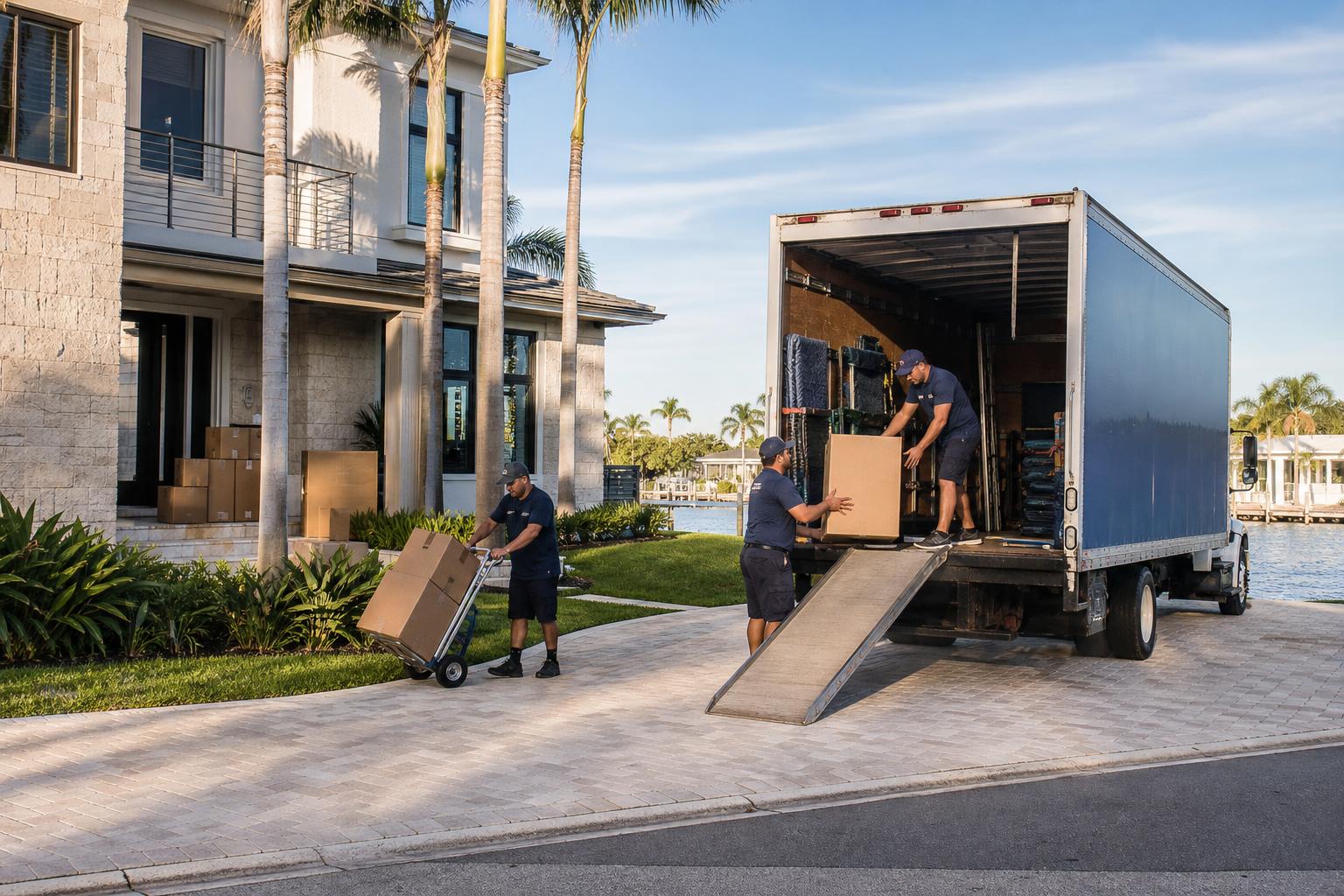
Decide where the moving truck can legally stop
Do not assume an open curb, loading zone, alley, or metered space can accommodate a moving truck. Ask the property manager, garage operator, or City of Tampa parking contact which location is authorized, the permitted vehicle size, applicable hours, and whether a reservation or payment is required. Record the exact loading location for both addresses. Note one-way streets, gates, restricted turns, fire lanes, tow-away areas, and the walking distance from the truck to the door. Building loading-zone and garage rules must be confirmed separately from general municipal parking information. A longer carry can affect labor and timing. If legal parking is uncertain, resolve it before finalizing the move scope rather than relying on the crew to find space on arrival. Source: City of Tampa — Parking: https://www.tampa.gov/parking
Check whether the plan affects the public right-of-way
Certain uses or work affecting Tampa’s public rights-of-way require authorization. A truck, portable container, equipment placement, or lane obstruction may need review, so neither the customer nor mover should assume curb space is automatically available. Describe the proposed location and activity when contacting the appropriate city office. Ask whether a right-of-way permit, traffic-control plan, temporary restriction, or another approval applies; who must obtain it; and how far in advance it should be requested. Keep any issued authorization accessible on moving day. Source: City of Tampa — Right of Way Permits: https://www.tampa.gov/tss-transportation/info/right-of-way-permits
Choose a route with tolls and vehicle limits in mind
Compare routes using more than mileage. The Selmon Expressway uses all-electronic tolling, so ask whether the planned route uses it and how any toll is handled in the written quote or contract. Confirm potential pass-through charges instead of assuming tolls are included. Also verify garage entrance height, ramp clearances, turning room, loading-bay dimensions, and building truck-size or weight limits. Provide the vehicle requirements to building management and give the resulting restrictions to the mover. If the truck cannot enter, establish a legal alternate loading point and account for the added carry distance. Source: Tampa Hillsborough Expressway Authority — Selmon Expressway: https://www.tampa-xway.com/selmon-expressway/
Prevent elevator and loading-zone delays
Reserve service elevators and loading areas for both origin and destination when required. Confirm the approved move window, check-in procedure, elevator dimensions, door clearance, protective-covering rules, certificate-of-insurance requirements, deposits, keys or access credentials, and the contact responsible for opening secured areas. Send the mover written access instructions before the estimate is finalized. On moving day, have the reservation confirmation and building contact available. If the elevator or loading zone is shared, ask what happens when an earlier reservation runs late. For a broader list of building questions, use the Tampa condo moving checklist at /resources/tampa-condo-moving-checklist/. If stairs, long carries, or restricted access may change labor needs, review the moving access cost factors at /resources/moving-access-cost-factors/.