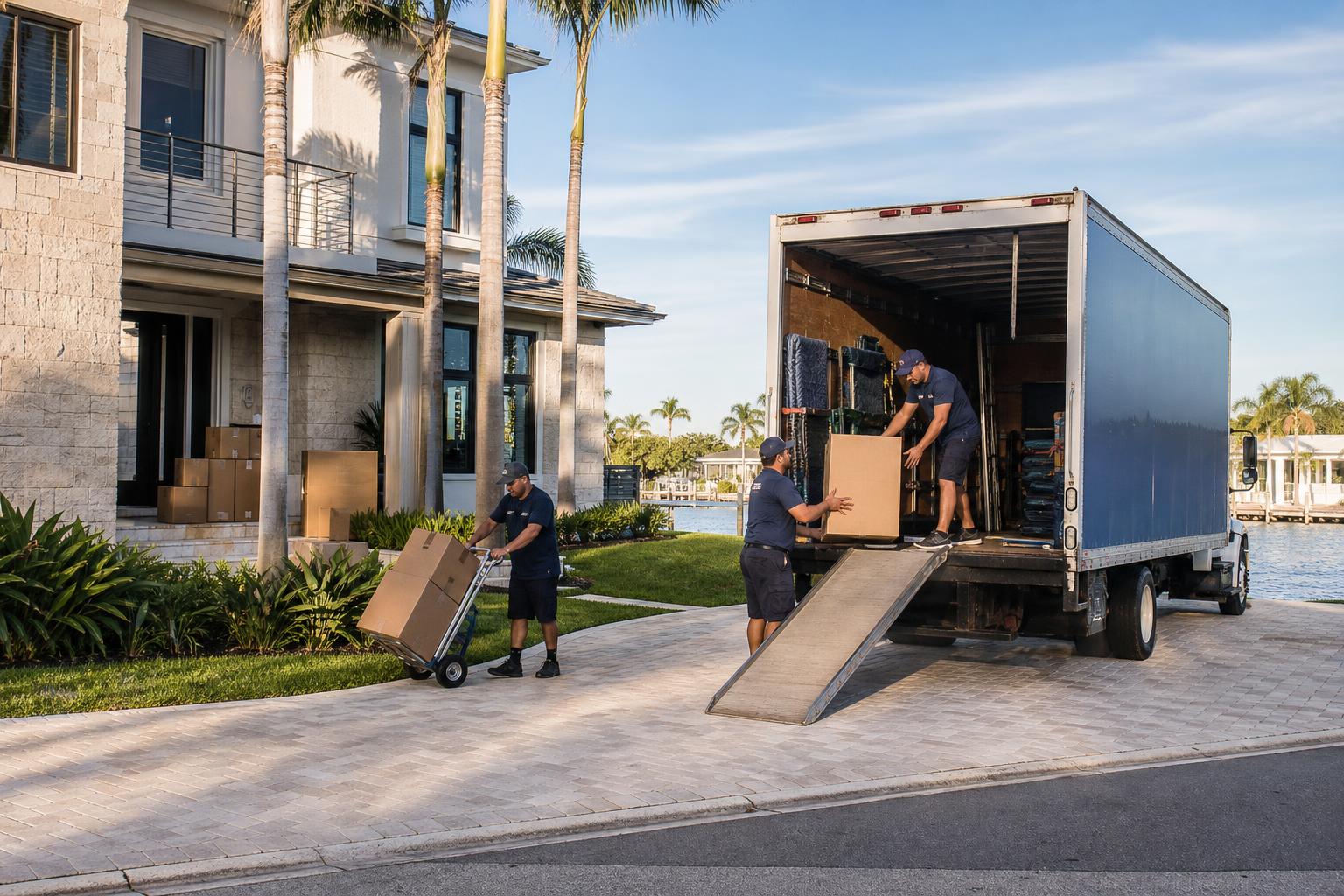
What should you decide first?
Start by defining exactly what must move and what help you need. Record the origin and destination addresses, preferred date or date range, property types, approximate room count, and any storage or extra stops. Create an inventory that flags furniture, appliances, fragile possessions, and unusually heavy or bulky items. Then choose which responsibilities you want to keep. You might pack everything yourself, request packing help, hire loading and unloading labor, or ask for broader moving support. Note whether furniture must be disassembled, whether packing materials are needed, and whether anything requires special handling. This written scope makes estimates easier to compare because each company receives the same information. For a move entirely within Florida, verify the mover or broker through the Florida Department of Agriculture and Consumer Services. Florida Chapter 507 also establishes written-estimate and contract requirements for household moves, subject to statutory requirements and exceptions. For an interstate move, verify the company through FMCSA’s Protect Your Move resources. Useful references: Florida Department of Agriculture and Consumer Services — Moving Companies (https://www.fdacs.gov/Consumer-Resources/Consumer-Rights-and-Responsibilities/Moving-Companies); The Florida Senate — Chapter 507, Household Moving Services (https://www.leg.state.fl.us/statutes/index.cfm?App_mode=Display_Statute&URL=0500-0599/0507/0507.html); FMCSA — Protect Your Move (https://www.fmcsa.dot.gov/protect-your-move).
How can Tampa conditions affect the plan?
Access may shape the crew, equipment, route, and time required. Ask each property about service-elevator reservations, loading areas, move hours, garage clearance, truck-size limits, certificates of insurance, floor protection, deposits, stairs, and walking distance from the truck. Downtown parking information does not replace a building’s rules, so confirm both where relevant. Do not assume curb or lane space can be occupied. Tampa requires right-of-way permits for certain uses or work affecting public rights-of-way; confirm whether a truck, container, or obstruction requires authorization. If a route may use the Selmon Expressway, ask how electronic tolls are handled in the estimate or contract. Weather also belongs in the schedule. Tampa’s hurricane season falls within the Atlantic season from June 1 through November 30. During that period, monitor official information and ask how postponement, cancellation, temporary storage, and redelivery would be handled. Evacuation zones reflect storm-surge risk and are different from FEMA flood zones; follow official instructions rather than relying on assumptions about either designation. Sources: City of Tampa — Parking (https://www.tampa.gov/parking); City of Tampa — Right of Way Permits (https://www.tampa.gov/tss-transportation/info/right-of-way-permits); Tampa Hillsborough Expressway Authority — Selmon Expressway (https://www.tampa-xway.com/selmon-expressway/); City of Tampa — Hurricane Information (https://www.tampa.gov/emergency-management/programs/hurricane-information); City of Tampa — Evacuation Zones (https://www.tampa.gov/emergency-management/programs/evacuation-zones).
What belongs on the preparation checklist?
Use this sequence to turn the move into manageable tasks: 1. Set a preferred date and at least one workable alternative. 2. List every pickup, delivery, and storage location. 3. Sort belongings into move, donate, sell, discard, and carry personally. 4. Build a room-by-room inventory and photograph valuable or damage-sensitive items. 5. Identify stairs, elevators, gates, long carries, loading docks, and parking constraints at both ends. 6. Obtain written building rules and reserve required facilities. 7. Decide who will pack, unpack, disassemble, assemble, load, and unload. 8. Separate medication, identification, records, keys, chargers, emergency supplies, and other essentials from the shipment. 9. Give each company the same scope and request a written estimate that identifies possible additional charges. 10. Read the contract’s valuation or liability terms, exclusions, claims process, payment terms, and cancellation provisions before signing. 11. Confirm utilities, address changes, property access, and key handoffs. 12. Recheck the forecast, official alerts, access arrangements, and contact details shortly before move day. For a narrower comparison of do-it-yourself, labor-only, and broader moving help, see /resources/diy-vs-labor-only-vs-full-service-moving/. For cost inputs tied specifically to stairs, elevators, parking, and carrying distance, visit /resources/moving-access-cost-factors/.
Which questions should you confirm before scheduling?
Ask each potential mover the same questions and keep the answers with the estimate: • Does the written scope include every address, stop, item category, and requested task? • Is the estimate binding, nonbinding, or subject to listed additions? • Which circumstances can create extra labor, material, toll, parking, storage, or specialty-handling charges? • Who is responsible for permits, parking arrangements, elevator bookings, and building paperwork? • Will another company or subcontractor perform any part of the move? • What valuation or liability option applies, and what are the exclusions and claim deadlines? • What happens if access is unavailable, the schedule changes, or severe weather disrupts the move? • What payment methods, deposits, cancellation terms, and delivery conditions apply? • What should not be packed or loaded? Do not schedule solely from a verbal total. Make sure the written documents reflect the actual scope and retain signed copies. When the details are ready, review relevant options at /services/ or share the scope through /contact/ for a tailored quote review.